In Summary
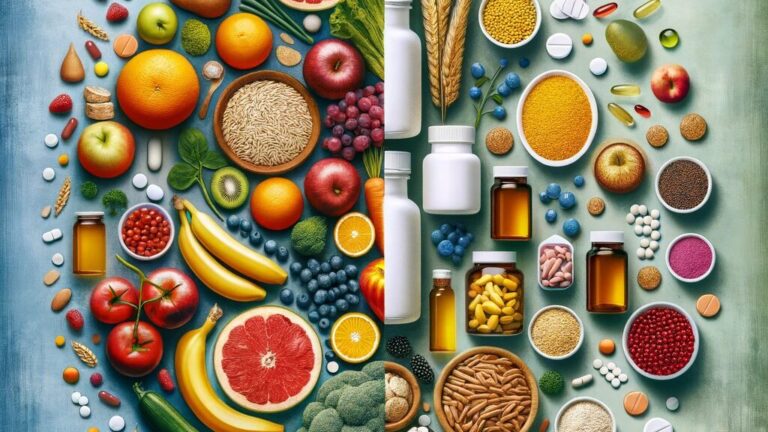
- Nutritional supplements deliver isolated compounds. Whole foods deliver those compounds within a biological matrix of fiber, cofactors, and synergistic phytochemicals that fundamentally alter how nutrients are absorbed and metabolized.
- Eating is not merely fuel delivery. It is a sensory and physiological process that activates digestive enzyme secretion, gut motility, microbiome modulation, and — through the act of chewing — neurological circuits associated with cognitive function.
- In Korean medicine, the Spleen and Stomach require sensory activation to perform their transforming and transporting functions. Bypassing the digestive process with supplements does not nourish the system in the same way — it delivers nutrients without activating the system that uses them.
- The supplement industry’s framing — that food is merely a nutrient delivery vehicle that can be optimized through isolation — is one of the most consequential nutritional errors of the past fifty years.
The fantasy of replacing meals with pills or powders has been part of popular imagination since at least the mid-twentieth century. It seems efficient. Food preparation is time-consuming, eating is interruptive, and the entire process could theoretically be optimized by simply taking the relevant nutrients in isolated form. Why eat a steak when you can take iron? Why eat vegetables when you can take a multivitamin?
As a clinician, I encounter versions of this logic regularly — patients who have replaced meals with protein shakes, or who supplement extensively while eating poorly, or who believe that their vitamin regimen compensates for their dietary habits. The premise is wrong. And understanding why it is wrong requires thinking carefully about what eating actually does, which goes considerably beyond nutrient delivery.
The Bioavailability Problem: Why Isolated Nutrients Behave Differently
The most straightforward argument against supplement-meal equivalence is bioavailability: the same nutrient in isolated supplement form is absorbed and metabolized differently than the same nutrient in a whole food matrix.
Iron is the clearest example. The iron in a supplement is typically ferrous sulfate — absorbed through a relatively simple intestinal mechanism. The iron in meat (heme iron) is absorbed through a completely different pathway, at significantly higher efficiency, with absorption rates modulated by the accompanying proteins, fats, and cofactors present in the food. The iron in plant foods (non-heme iron) is also absorbed differently from supplements, with absorption dramatically influenced by co-consumed vitamin C, calcium, and phytic acid.
This is not a marginal difference. In populations relying on supplementation for iron repletion, the clinical response often significantly underperforms what the dose should theoretically deliver — because the absorption dynamics of isolated ferrous sulfate in the absence of a food matrix are substantially less efficient than iron consumed within whole food contexts.
The same principle applies across most micronutrients. Fat-soluble vitamins (A, D, E, K) require dietary fat for absorption — absorption that is far more reliably provided by food than by the variable fat content of a typical supplement regimen. Calcium absorption depends on magnesium, vitamin D, and vitamin K2 — cofactors that whole dairy foods provide in appropriate ratios but that most calcium supplements do not. Beta-carotene from supplements does not reduce lung cancer risk; beta-carotene from vegetables does — a finding that led to the termination of a major clinical trial when the supplement was found to increase risk in smokers.
The pattern is consistent: isolated nutrients behave differently from nutrients embedded in their biological matrix. The food is not merely a delivery vehicle. It is part of the mechanism.
The Digestive Process as Biological Activation
Beyond bioavailability, there is a more fundamental point that the supplement model entirely ignores: eating is a physiological process that does more than deliver nutrients. It activates the digestive system.
The cephalic phase digestive response — triggered by the sight, smell, and anticipation of food — initiates gastric acid secretion, digestive enzyme production, and bile release before a single bite is consumed. This preparatory activation is essential for the system’s capacity to process what follows. It does not occur with supplements taken with water.
Chewing is the first stage of mechanical digestion and chemical digestion simultaneously. The physical fragmentation of food increases surface area for enzymatic access. Salivary amylase begins starch digestion. The mechanical stimulation of the jaw activates neurological pathways associated with cognitive alertness — research in oral rehabilitation has documented associations between chewing function and cognitive performance in aging populations. The rhythmic physical activity of mastication stimulates cerebral blood flow in ways that swallowing capsules does not.
Gastric distension — the physical expansion of the stomach with food volume — triggers satiety signaling through mechanoreceptors, regulates the rate of gastric emptying, and provides the hormonal signals (ghrelin suppression, CCK and PYY release) that communicate nutritional status to the hypothalamus. A supplement taken with a glass of water does not produce meaningful gastric distension. The satiety and metabolic regulation signals are absent.
The gut microbiome — increasingly recognized as a central determinant of immune function, mood regulation, and metabolic health — is primarily shaped by the fiber, polyphenol, and fermented substrate content of whole foods. Supplements generally contribute minimally to microbiome diversity. The consequence is that supplement-dependent nutrition strategies tend to produce microbiome compositions that diverge increasingly from those associated with health in population studies.
The Korean Medical Perspective: Spleen Qi and the Need for Activation
Korean medicine offers a framework that captures something the Western nutritional model misses: the digestive system requires activation to function optimally, and that activation is partly sensory and partly mechanical.
The Spleen and Stomach, in Korean medical physiology, govern the transformation and transportation of food essence — the process by which consumed material is converted into Qi, Blood, and Body Fluids. This function is not passive. It requires what classical texts describe as “digestive fire” (腐熟之氣) — the active metabolic energy that the Spleen directs toward processing ingested material.
This digestive fire is stimulated by the sensory engagement of eating: the flavors, textures, aromas, and temperatures of food provide the signals that activate Spleen function. Cold, flavorless, textureless inputs — which is essentially what a supplement dissolved in water provides — do not stimulate this activation in the same way. The nutrients arrive, but the system that would use them optimally has not been appropriately prepared to receive them.
This is why classical Korean dietary guidance emphasizes warm, cooked foods served at appropriate temperatures, with appropriate flavors that correspond to the organ systems being supported. It is not aesthetics. It is a systematic understanding of how digestive activation works, arrived at through centuries of clinical observation rather than biochemical analysis.
The modern finding that ultra-processed foods — despite often being nutritionally fortified — produce worse health outcomes than whole foods with equivalent macronutrient profiles is a quantitative expression of the same principle. The format of nutrition matters as much as its content.
When Supplements Are Appropriate
This is not an argument against all supplementation. There are clear clinical indications for specific supplements:
Vitamin D deficiency is endemic in populations with limited sun exposure and is difficult to correct through diet alone — supplementation is appropriate and evidence-supported. Folate supplementation in pregnancy prevents neural tube defects with a robustness that dietary sources cannot reliably match. B12 supplementation is essential for strict vegans and for older adults with impaired gastric acid secretion. Iron supplementation is appropriate in documented deficiency where dietary correction is insufficient or impractical.
These are specific, indication-driven uses of supplements to correct documented deficiencies or to meet needs that diet cannot reliably address — best confirmed and dosed with a clinician rather than self-directed. They are different in kind from the general replacement of dietary nutrition with supplemental equivalents, which the evidence does not support.
The appropriate clinical framing: supplements address specific deficiencies or specific increased requirements. They do not replicate the full biological effects of eating well. A patient who supplements extensively while eating poorly is addressing a subset of the consequences of poor diet while leaving the majority unaddressed.
The Practical Implication: What “Eating Well” Actually Means
The evidence points toward a principle that is simpler than most nutritional frameworks suggest: dietary diversity, food quality, appropriate portions, and regular meal timing — the foundational pattern of traditional diets in populations with low chronic disease rates — produces health outcomes that no supplementation protocol has replicated in controlled trials.
This does not require exotic foods, expensive ingredients, or elaborate preparation. It requires that the majority of nutrition come from minimally processed whole foods consumed in the context of actual meals — with the sensory engagement, chewing, and digestive activation that meals provide and supplements do not.
The supplement industry has built a very large commercial structure on the premise that food is a nutrient delivery system that can be optimized through isolation and concentration. The clinical evidence consistently finds that this premise is incomplete. Food is a biological system. Eating is a physiological process. Supplements are useful tools for specific purposes. They are not a substitute for either.
This article reflects the clinical observations and teaching practice of Professor Seungho Baek, Professor of Korean Medicine at Dongguk University College of Korean Medicine, specializing in Pathology and Oncology.
