In Summary
- “Optimal imbalance” (적불균형, jeok-bul-gyunhyeong) is a core idea of Eight Constitution Medicine: health is not equal organ strength but a workable, proportional difference among the organs.
- The constitution is the inherited ranking of organ strength, built on antagonistic pairs — lung–liver and spleen–kidney — with the heart standing outside the scheme as the central organ.
- Illness widens the gap between strongest and weakest organ into “excessive imbalance” (과불균형); treatment works to restore the optimal spacing, not to reorder the ranks.
- The organ rank itself is fixed for life; what treatment changes is how that fixed hierarchy functionally expresses — from excessive back toward optimal.
Before diving into the common curiosity — “I’m a ___ type, so what foods are best for me?” — we need to understand one of the core foundations of Eight Constitution Medicine (ECM), part of Korean Traditional Medicine (KTM), the traditional healing system of Korea also known as Hanbang (한방): the concept of “optimal imbalance,” or 적불균형 (jeok-bul-gyunhyeong). Understanding this idea is essential before applying ECM in daily life or clinical practice.
Understanding the Framework of Organ Relationships
In ECM, your constitution is not just a label. It is a reflection of the inherent functional hierarchy among your internal organs, which originates from antagonistic relationships between paired organs:
- Lung (Metal) vs Liver (Wood)
- Spleen vs Kidney (Water)
These pairings mirror fundamental functional interactions in the body and are used to identify which organs are dominant and which are weaker from birth. The heart is generally set apart from this classification, as its role in ECM is central and supervisory rather than one of the paired working organs.
A Hypothetical Example: Measuring Organ Energies
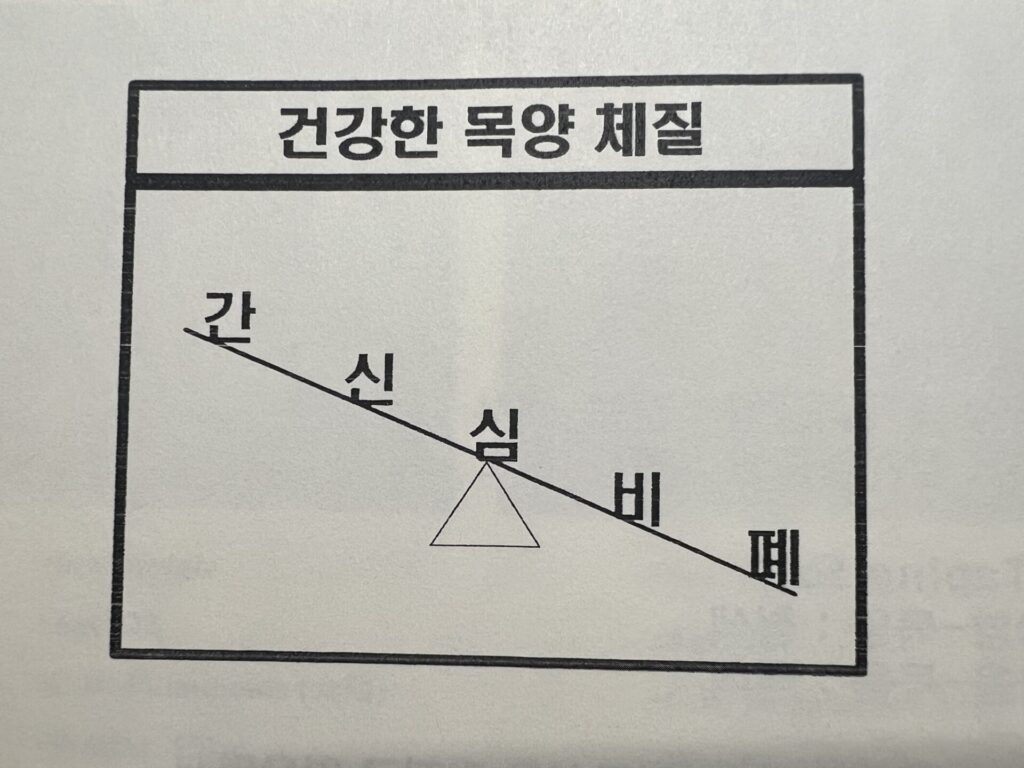
Suppose we had advanced diagnostic technology that could quantify the functional strength of each organ. A reading might reveal:
- Liver: 10
- Kidney: 8
- Spleen: 6
- Lung: 5
The order of strength — Liver > Kidney > Spleen > Lung — forms the basis of the constitutional type. In this case the individual would be classified as Hepatonia, a constitution in which the liver is dominant.
What Happens When Health Deteriorates?
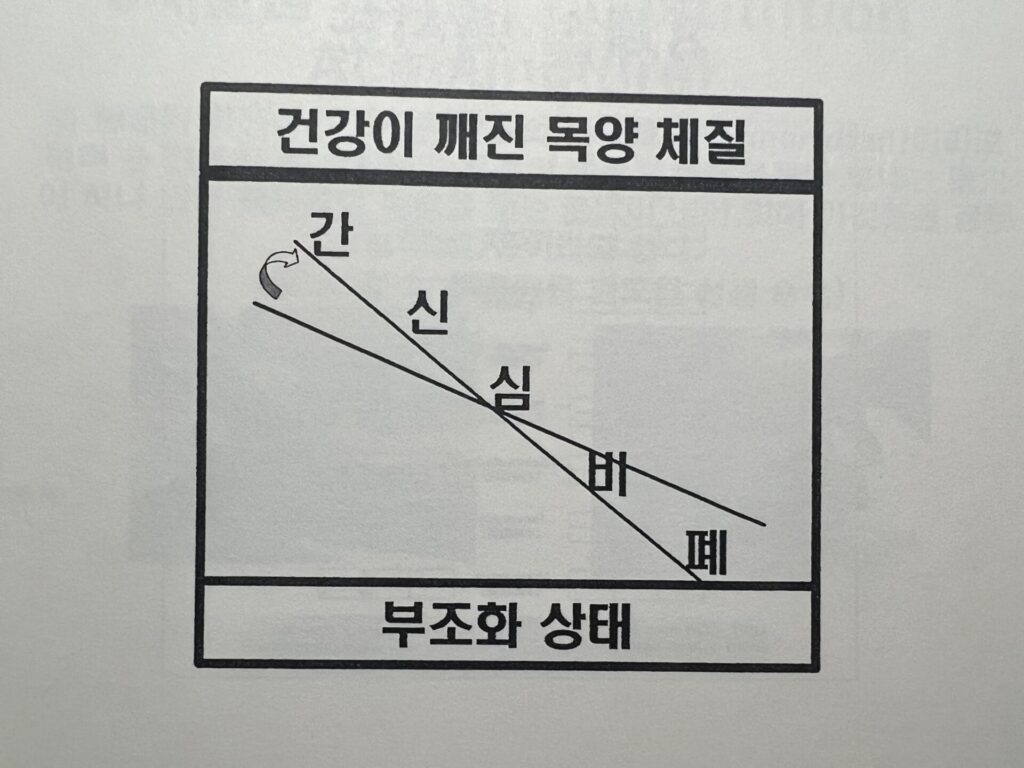
Now imagine the same individual becomes ill. Their internal energy distribution might shift:
- Liver: 13
- Kidney: 9
- Spleen: 5
- Lung: 2
Notice that the rank order is unchanged — liver still leads, lung still trails — but the gap between strongest and weakest has widened. That widening disparity is what produces functional imbalance, symptoms, and, if unmanaged, chronic conditions.
Optimal vs. Excessive Imbalance
This leads to two central ideas in ECM:
- Jeok-Bul-Gyunhyeong (적불균형 / Optimal Imbalance): a healthy, harmonious state in which the differences in organ strength are present but moderate enough to support stability and resilience. The organs need not be equal; they need to function together effectively despite their differences.
- Gwa-Bul-Gyunhyeong (과불균형 / Excessive Imbalance): a state in which the difference in strength between organs becomes too extreme, producing dysfunction, symptoms, or disease — an overwhelming disparity that disrupts homeostasis.
In other words, the goal is not equality but proportionality. The body thrives where differences in strength are present but not extreme.
What Does Constitutional Diagnosis Actually Mean?
A constitutional diagnosis is not just a label. It reveals the natural energetic hierarchy of your organs — which are dominant (and may become overactive under stress), which are weaker (and more likely to falter first), and how your body tends to respond to food, stress, and environment. This is the foundation for personalized treatment and lifestyle guidance in ECM.
The Role of Treatment in ECM
Treatment in Eight Constitution Medicine is not about making all organs equal. It is about moving an excessive imbalance back toward an optimal one — for example:
- Strengthening a weak lung function
- Soothing an overactive liver
- Adjusting dietary intake to reduce the load on specific organs
- Using constitution-specific acupuncture or herbs
Crucially, this does not change the rank order itself — the constitution is fixed for life. What treatment restores is the functional spacing of that fixed hierarchy, returning the body to a state where it can self-regulate and the differences are functional rather than pathological.
Why This Concept Matters
Many people rush to learn what they should eat or avoid based on their constitution. But without the idea of optimal imbalance, the core value of ECM is missed. Knowing your constitution is about understanding your baseline organ distribution — and healing is not about forcing balance, but about working with your body’s natural design.
Conclusion
Eight Constitution Medicine teaches that health lies not in perfect balance but in adaptive, optimal imbalance. A person in 적불균형 is healthy because their organs cooperate within tolerable differences; when those differences grow too large — 과불균형 — health deteriorates. To diagnose constitution is to read the body’s internal compass; to treat constitutionally is to recalibrate it. As always, a confirmed constitutional diagnosis comes from pulse diagnosis by a trained ECM clinician, not from self-assessment.
For the original Korean text, visit here.
Related reading: Adequate Imbalance: The ECM Concept That Redefines What “Healthy” Means · What Is Eight Constitution Medicine? A Beginner’s Guide
